Electrical System
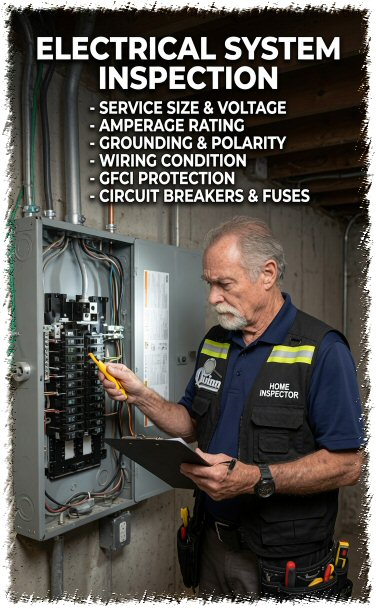
Electrical System Inspection: Safety and Reliability from the Service Entrance In
At Quinn Inspections & Environmental Testing (D. Quinn Construction Inc.), we recognize that a home’s electrical system is one of its most critical—and potentially hazardous—components. Serving Northwest Montana for more than 30 years with over 13,000 inspections completed, our certified ASHI inspectors perform careful visual evaluations of the electrical system to help buyers and owners understand its capacity, condition, and safety features.
Our electrical inspections cover service size, voltage, amperage, grounding, polarity, wiring, GFCI protection, circuit breakers or fuses, and visible defects. These elements determine whether the system can safely support the home’s electrical demands and protect occupants from shock and fire hazards.
Service Size, Voltage, and Amperage
Inspectors identify the electrical service capacity entering the home. This includes:
- Service size (commonly 100-amp, 150-amp, 200-amp, or larger)
- Voltage characteristics (typically 120/240-volt residential service)
- Amperage rating of the main service panel and main disconnect
Adequate service capacity is important for modern households with multiple appliances, electronics, and potential future needs such as electric vehicle chargers or expanded HVAC systems. Undersized service can lead to overloaded circuits and safety concerns.
Grounding
Proper grounding is essential for safety. We evaluate:
- Presence and apparent condition of the grounding electrode system
- Bonding of the service equipment and water piping (where visible)
- Continuity of grounding connections at the panel and accessible locations
A correctly grounded system helps protect against electrical shock and provides a safe path for fault current.
Polarity
Correct polarity ensures that hot and neutral conductors are properly connected at receptacles. Inspectors check:
- Polarity at a representative sampling of accessible outlets
- Any reversed hot/neutral conditions that could create shock hazards or interfere with the proper operation of polarized devices and appliances
Incorrect polarity is a common finding in older homes and is readily correctable when identified.
Wiring
The type and condition of visible wiring are carefully examined. We look for:
- Wiring materials (copper, aluminum, or other types present)
- Condition of exposed wiring, including insulation integrity
- Loose, hanging, damaged, or improperly supported conductors
- Evidence of overheating, such as discolored insulation or scorched areas
- Junction boxes that are open, overcrowded, or lacking covers
While a home inspection does not include removing finished surfaces or testing every circuit under load, visible wiring defects are documented so they can be addressed by a qualified electrician.
GFCI Protection
Ground Fault Circuit Interrupter (GFCI) protection is a critical safety feature, especially in areas where water and electricity may come into contact. Inspectors verify:
- Presence of GFCI protection at required or recommended locations (kitchens, bathrooms, garages, exterior outlets, unfinished basements, and crawl spaces, where accessible)
- Proper function of GFCI devices through testing of representative outlets and breakers
- Missing or non-functional GFCI protection that leaves occupants at higher risk of shock
GFCI devices can prevent serious injury or electrocution by quickly interrupting power when a ground fault is detected.
Circuit Breakers and Fuses
The main service panel and any subpanels are examined for:
- Type of overcurrent protection (circuit breakers or fuses)
- Condition and labeling of breakers or fuse holders
- Evidence of double-tapping, oversized breakers, or other improper installations
- Signs of overheating, corrosion, or physical damage inside the panel
- Accessibility and working clearance around the panel
Proper overcurrent protection is the primary defense against electrical fires caused by overloaded circuits or short circuits.
Visible Defects
In addition to the specific items above, inspectors note any other visible electrical defects that could affect safety or performance, such as:
- Missing or damaged cover plates
- Loose receptacles or switches
- Extension cords used as permanent wiring
- Open splices or unprotected connections
- Evidence of DIY work that does not meet basic safety expectations
Why a Thorough Electrical System Inspection Matters
Electrical problems are among the leading causes of residential fires and can pose serious shock hazards. In Northwest Montana homes—ranging from older cabins and farmhouses to modern custom residences—electrical systems vary widely in age, capacity, and quality of installation. Identifying deficiencies early allows buyers to negotiate repairs and owners to prioritize safety upgrades.
Our inspections are visual evaluations of reasonably accessible components and are not intended as a code-compliance inspection or a substitute for evaluation by a licensed electrician. Reports clearly describe observed conditions and materials so clients can make informed decisions.
Every future homeowner deserves peace of mind. Whether you are purchasing a residential home, luxury estate, manufactured home, multi-family property, or commercial building, Quinn Inspections and Environmental Testing provides the thorough, experience-based evaluation you need.
Schedule your inspection today:
Call (406) 755-5322
Serving Flathead Valley, Whitefish, Columbia Falls, Kalispell, Libby, Eureka, Troy, Rexford, Polson, Bigfork, Lakeside, Thompson Falls, and surrounding Northwest Montana communities.